Thứ Sáu, 28 tháng 10, 2016

Khai Dinh tomb

Though the smallest, Khai Dinh tomb is the most costly and recent compared with other Nguyen royal tombs.

Location and history

After his ascendancy to throne in 1916, Emperor Khai Dinh chose the slope of Chau Chu (Chau E) Mountain, which is 10km from Hue center, to construct his “home in the other world” – according to Oriental belief. It was started bulding in 1920 and completed 11 years later, by his successor – Emperor Bao Dai. Visit Hue Vietnam Travel Guide

In order to complete the tomb, the rulers had to raise national tax to 30%. By then Vietnam sovereignty was lost to French invaders and Western culture was prevailing all over the country. Consequently Khai Dinh tomb is the result of the intermingling of Oriental and Occidental, Roman and Gothic style, Hindu and Buddhist style, as well as ancient and modern features. It’s also known as Ung Lang

>> vietnam travel agency

What to see

Despite being the smallest, Khai Dinh Tomb is the most recent and costly amongst other Nguyen royal tombs. Khai Dinh chose to build his tomb by modern materials like concrete, slates and wrought iron, hence its appearance is quite gray and imposing.

Khai Dinh tomb

At first, the main building brings about a strong Western feel, however, the landscape was arranged to reflect traditional perceptions: a balanced combination between wood, land, water and plants. Overall, it’s an emerging rectangular structure with 127 steps, leaning against the mountain. The side walls are formed by the biggest sculptures of dragons in all over Vietnam. After climbing upstairs, tourists can first see the house of epitaph. The statues of madarines court (including madarines, horses, soldiers…) are placed at the courtyard.

The most notable place in Khai Dinh Tomb is Thien Dinh Palace, which contains bronze statues and steles of the King. Walls are densely decorated and inlaid with elaborate glass and porcelain designs. The most highlighted feature of this room is the intricate painting on the ceiling, illustrating nine dragons amidst fleeting clouds. Inside the tomb, there are two statues modelled the King: the one on the throne was sculptured in Paris in 1920 by Ducuing and Barbedienne.

When to get there

All tourist sites in here are opened all year long. Entrance fee is even free on big holidays such as the first of Lunar New Year and National Day (September 2nd). Khai Dinh Tombopens from 7.30AM to 5.00AM

Khai Dinh tomb

How to get there

The tomb is about 7km away from the center of Hue city. Travellers are recommended to get there by motorbike or taxi.

source: asiatravelagencies.com/en/asia-guides/khai-dinh-tomb.html

Khám Phá Nhật Bản _ Nên đi du lịch vào mùa nào ?

Cứ mỗi độ thu về đông sang, là đất nước Nhật Bản lại tràn ngập sắc đỏ, vàng hay cảm rực rỡ ở khắp mọi nơi. Mùa thu đến dường như mang đến cho Nhật Bản một diện mạo mới, khoác lên mình một tấm áo mới…đầy sức sống và sự cổ kính. Sự kết hợp hài hòa giữ lá đỏ với những tòa thành còn sót lại của Nhật Bản – nó tạo nên một khung cảnh diễm lệ dường như chỉ có ở trong phim thôi vậy.

Mùa thu Nhật Bản bắt đầu từ tháng 9 đến tháng 11, ở khắp mọi nơi trên đất nước Nhật sẽ chào đón mùa lá đỏ. Bên cạnh hoa anh đào mùa xuân thì thu cũng là một mùa tuyệt đẹp ở Nhật. Bài viết này sẽ giới thiệu đến bạn những điểm tham quan ngắm lá phong đỏ nổi tiếng nhất Nhật Bản. Ngoài ra, bài viết cũng cung cấp thông tin về các tuyến xe lửa đến những địa điểm trên và các sự kiện sắp tới sẽ được tổ chức tại Nhật.

Hida Takayama (tỉnh Gifu)

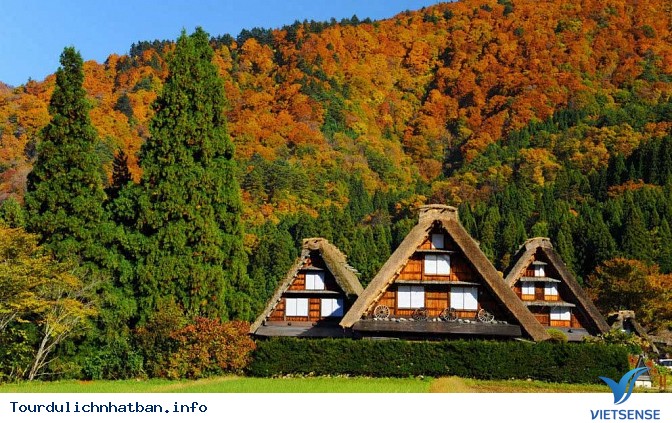
Khu Hida Takayama thuộc tỉnh Gifu, Chubu ngày xưa vốn là một thị trấn quanh thành cổ, nên khi đến đây bạn sẽ cảm thấy như mình đang quay ngược lại thời gian với những căn nhà xưa xũ, dãy phố cổ kính và những món ăn truyền thống đặc sắc. Ngoài ra, những ngôi chùa cổ nằm lẫn trong khung cảnh thiên nhiên trù phú cùng cảnh sắc rực màu lá phong chắc chắn sẽ làm cho bạn xúc động đến không thể thốt thành lời.

Du Lịch Nhật Bản Mùa Thu Ngắm Vẻ Đẹp Lá Phong Rực Rỡ - Ảnh 1

Ảnh: japandreamtours.com

Thời điểm lá đỏ đẹp nhất: Từ giữa tháng 10 – giữa tháng 11

Suối nước nóng Nyuto-onsenkyo (tỉnh Akita)

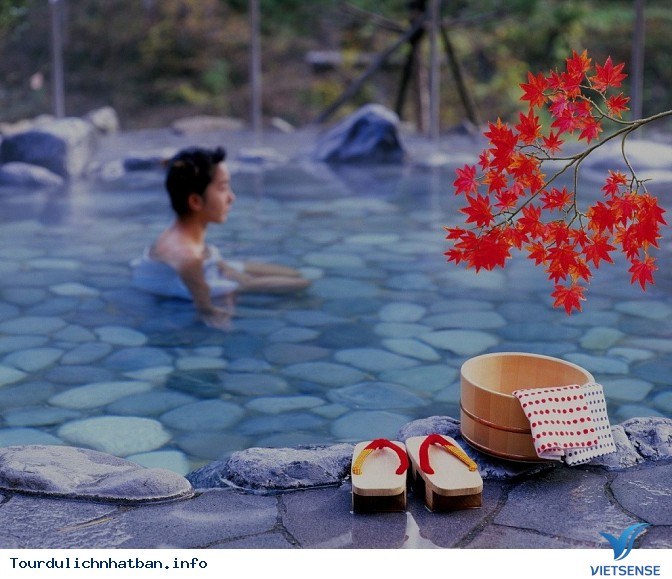
Suối nước nóng Nyuto-onsenkyo nằm dưới chân núi Nyuto thuộc tỉnh Akia phía Bắc Nhật Bản. Là một khu suối nước nóng nổi tiếng với rất nhiều hồ tắm lộ thiên. Nếu bạn đến đây đúng vào mùa lá phong thì bạn có thể vừa ngâm mình trong suối nước nóng, vừa được chiêm ngưỡng cảnh núi non xung quanh nhuộm màu đỏ hoặc vàng rực rỡ. Điều này nhất định sẽ trở thành một kỷ niệm đẹp, khó quên trong đời.

Du Lịch Nhật Bản Mùa Thu Ngắm Vẻ Đẹp Lá Phong Rực Rỡ - Ảnh 2

Ảnh: asiatrend.org

Thời điểm lá đỏ đẹp nhất: Từ giữa đến cuối tháng 10

Kamakura (tỉnh Kanagawa)

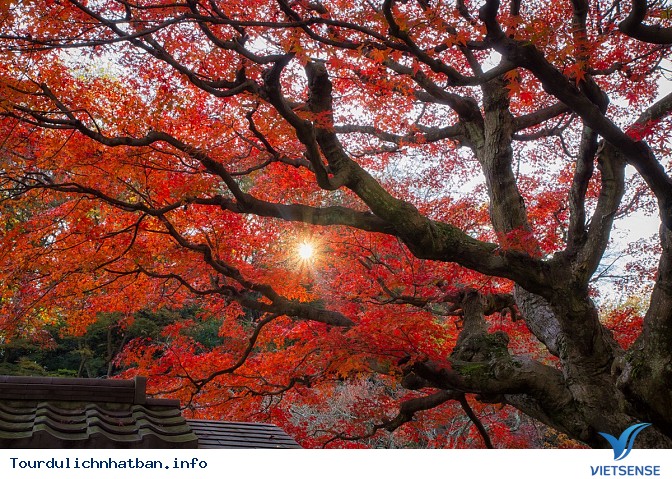
Kamakura thuộc tỉnh Kanagawa nằm bên cạnh thủ đô Tokyo là một khu vực nổi tiếng có các di tích lịch sử như tượng Phật khổng lồ Daibutsu…Tản bộ ở khu vực này vào mùa thu, bạn có thể băng qua những con đường trải thảm lá đỏ hay những đường hầm được tạo ra từ những chiếc lá phong đỏ và vàng, cũng như hòa mình vào khung cảnh thiên nhiên đẹp tuyệt vời.

https://halongcruisesbooking.com/en/
http://ketnoitoduyen.com/
http://hoiandaytrips.com/
http://hostels-in-vietnam.com/

Du Lịch Nhật Bản Mùa Thu Ngắm Vẻ Đẹp Lá Phong Rực Rỡ - Ảnh 3

Ảnh: josefdiermair.com

Thời điểm lá đỏ đẹp nhất: Từ cuối tháng 11 – giữa tháng 12

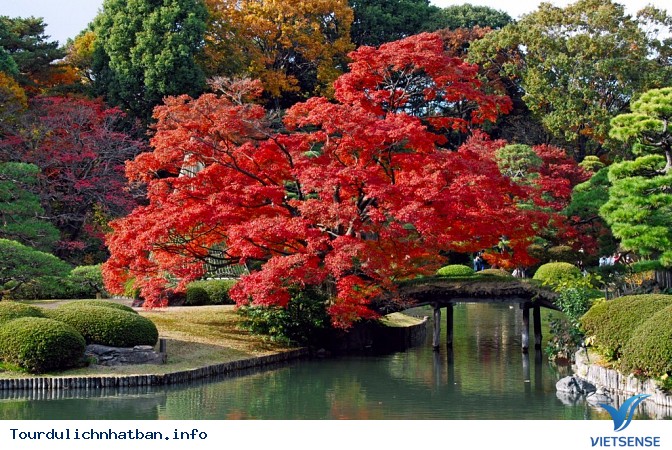
Công viên Rikugi-en (Tokyo)

Công viên Rikugi-en được tướng quân đương thời xây dựng vào năm 1702 (thời đại Edo), là một công viên xinh đẹp bao gồm cây cối, hồ nước và những cây cầu, đây còn là một điểm đến lý tưởng để ngắm lá đỏ ngay trong trung tâm thủ đô Tokyo. Đặc biệt hơn nữa là vào thời điểm 400 cây phong trong công viên lên màu đẹp nhất, nơi đây còn được gắn thêm những dây đèn lấp lánh khiến hàng cây phong đỏ rực sẽ nổi bật trong đêm, tạo nên một không gian kì diệu như trong phim.

http://cambodiahotels.co/
http://indochinatours.info/
http://packagetour.org/

Du Lịch Nhật Bản Mùa Thu Ngắm Vẻ Đẹp Lá Phong Rực Rỡ - Ảnh 4

Ảnh: Hqwalls.com

Thời điểm lá đỏ đẹp nhất: Từ cuối tháng 11 – đầu tháng 12

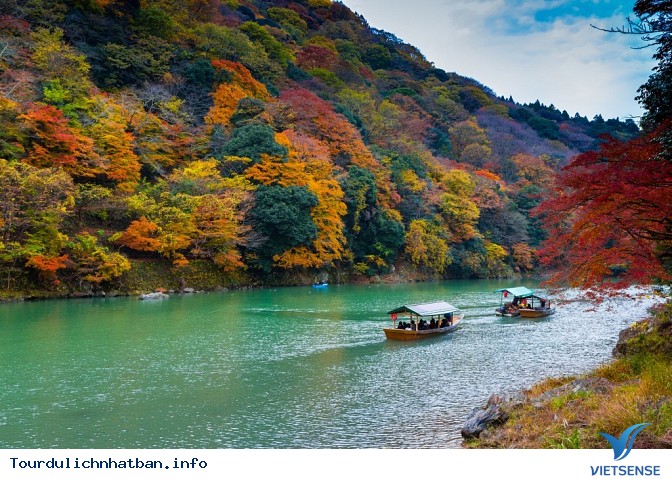
Chèo thuyền trên sông Hozu (Kyoto)

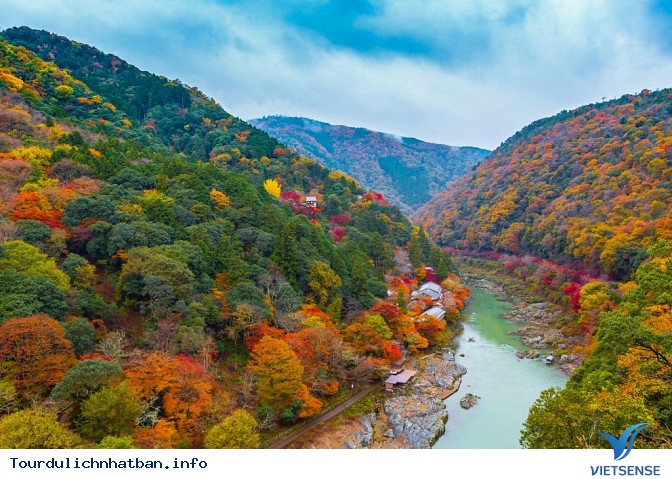
Sông Hozu là một con sông xinh đẹp nằm ở phía Tây Kyoto. Vào mùa lá đỏ, sẽ rất tuyệt vời khi ngồi trên chiếc thuyền nhỏ và cùng chèo thuyền xuôi dòng, vừa ngắm nhìn phong cảnh hữu tình của những chiếc lá phong đổi màu sẽ làm cho bạn có thêm nhiều trải nghiệm phong phú. Ngoài ra ở khu vực này còn có xe lửa chạy ngang qua, ngồi trên chiếc xe cổ kính chạy chầm chậm trong khung cảnh thiên nhiên hùng vĩ như chưa từng thay đổi từ xưa sẽ khơi dậy cảm giác hoài cổ trong bạn.

http://halongbaycruisebooking.com/
http://halong-bay-hotels.com/
http://vietnamworldheritages.org/

Du Lịch Nhật Bản Mùa Thu Ngắm Vẻ Đẹp Lá Phong Rực Rỡ - Ảnh 5

Ảnh: bitt-n.com

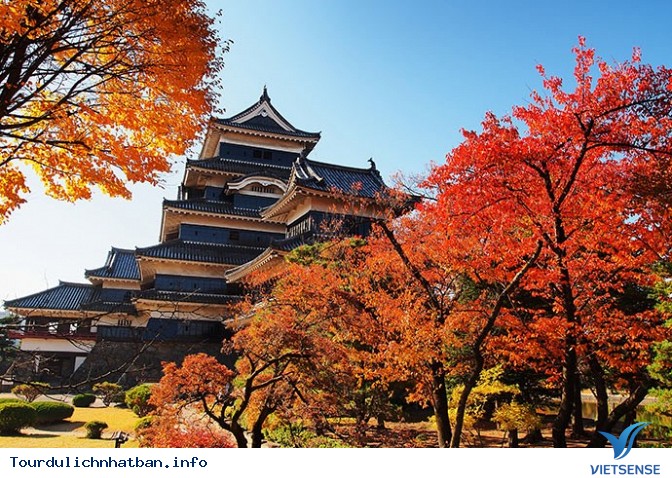
Thành Matsumoto (Tỉnh Nagano)

Thành Matsumoto xinh đẹp với 2 màu trắng và đen tương phản, là tòa thành được công nhận là Quốc bảo của Nhật Bản. Nếu nhìn vào các hào sâu xung quanh thành, các bạn sẽ thấy phản chiếu dưới nước là tòa thành thấp thoáng màu lá phong đỏ, khiến cho cảnh đẹp nơi đây càng trải rộng lớn.

Du Lịch Nhật Bản Mùa Thu Ngắm Vẻ Đẹp Lá Phong Rực Rỡ - Ảnh 6

Ảnh: japan-magazine.jnto.go.jp

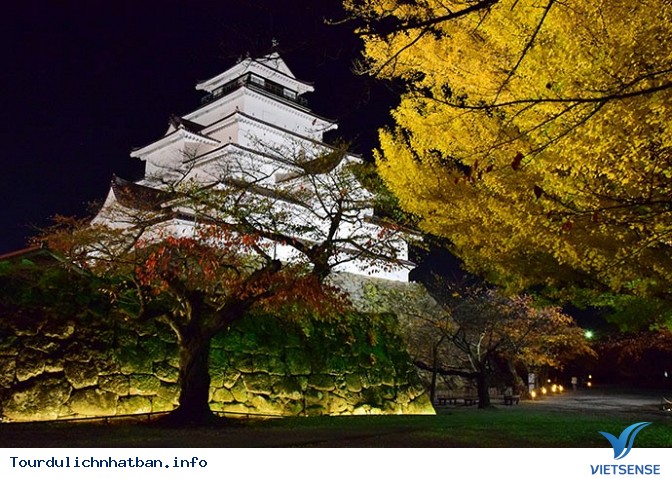
Thành Tsuruga (Tỉnh Fukushima)

http://vietnamtravelblog.info/
http://asiatravelagencies.com/
http://vietdaytours.com/

Công viên Tsuruga bao bọc xung quanh thành Tsuruga được lên đèn vào buổi tối sẽ tạo cơ hội cho bạn được thưởng thức sự kết hợp hài hòa giữa những chiếc lá phong huyền ảo, bồng bềnh cùng những tòa thành trang nghiêm sừng sững.

Du Lịch Nhật Bản Mùa Thu Ngắm Vẻ Đẹp Lá Phong Rực Rỡ - Ảnh 7

Ảnh: japan-magazine.jnto.go.jp

Thành Okayama (Tỉnh Okayama)

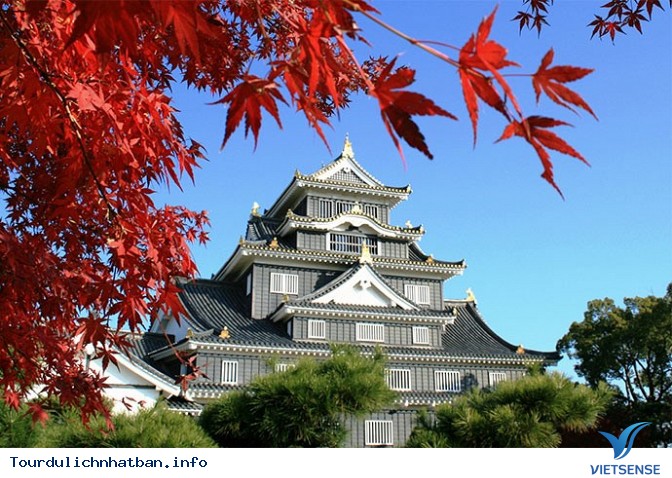
Tòa tháp phòng thủ của thành Okayama được nhuộm một màu đen tuyền nên nơi đây còn được gọi là “thành quạ”. Và màu đen này kết hợp với sắc đỏ của lá phong sẽ tạo nên một ấn tượng mạnh cho du khách.

Du Lịch Nhật Bản Mùa Thu Ngắm Vẻ Đẹp Lá Phong Rực Rỡ - Ảnh 8

Ảnh: japan-magazine.jnto.go.jp

Thành Matsue (Tỉnh Shimane)

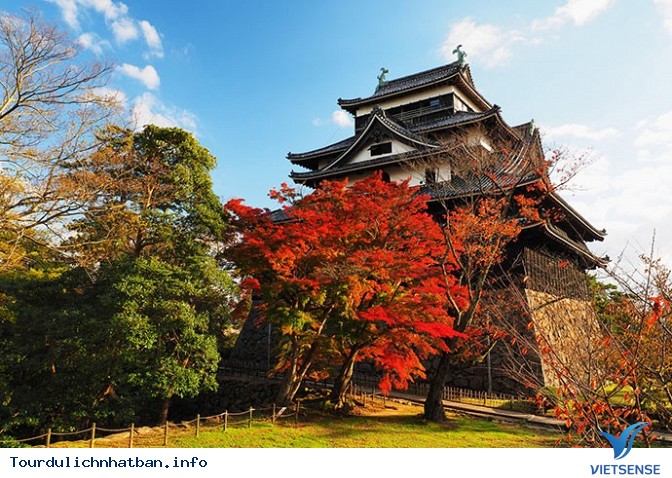
Thành Matsue có phần mái có tạo hình tuyệt đẹp khiến người xem liên tưởng đến hình ảnh một chú chim với đôi cánh dang rộng. Từ khuôn viên quanh thành, bước xuống thuyền xuôi theo dòng sông và ngắm cảnh, bạn sẽ cảm nhận được một cách sâu sắc hương vị của mùa thu.

Du Lịch Nhật Bản Mùa Thu Ngắm Vẻ Đẹp Lá Phong Rực Rỡ - Ảnh 9

Ảnh: japan-magazine.jnto.go.jp

THÔNG TIN VỀ NHỮNG TUYẾN ĐƯỜNG SẮT NGẮM CẢNH

Đường sắt ngắm cảnh Sagano

Sagano là tuyến xe lửa ngắm cảnh chạy bên bờ sông Hozu Kyoto. Các bạn đừng bỏ lỡ cơ hội được tham quan vô số các địa điểm thú vị xung quanh khu vực 4 nhà ga này cùng với gia đình và người thân nhé!

Du Lịch Nhật Bản Mùa Thu Ngắm Vẻ Đẹp Lá Phong Rực Rỡ - Ảnh 10

Ảnh: bitt-n.com

Đường sắt chạy qua khe núi Kurobe

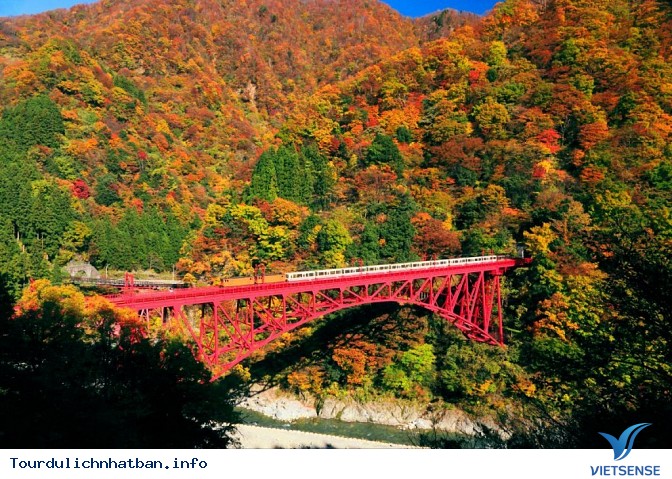
Chiếc xe điện nhỏ nhắn chạy băng qua hẻm núi chữ V sâu nhất Nhật Bản nằm ở tỉnh Toyama.

Du Lịch Nhật Bản Mùa Thu Ngắm Vẻ Đẹp Lá Phong Rực Rỡ - Ảnh 11

Ảnh: zekkeijapan.com

Thứ Năm, 27 tháng 10, 2016

Mid-Autumn Festival in Vietnam

Vietnam is the country with many beautiful festivals. There are hundreds of festivals each year. Besides the Tet Holiday, the Mid-Autumn festival is one of the most famous festivals and it is a traditional celebration for Vietnamese children.

History and feature

The Mid-Autumn festival dates back to the Rice Civilization of the Red River delta, over 4,000 years ago. It is fantastic and charming with its history. It is held on the 15th day on the 8th lunar month (often in late September or early October) in the middle of autumn and it is celebrated for a whole day. On this day, the adults and the parents prepare many different foods – Moon cakes, candies, biscuits, jellies, and fruit, such as grapefruit, longan fruit, bananas, apples, mango, etc. All of them are designed with fun symbols, for example: dog, cat, mouse.

Lion dance

Moon cakes are the specific cakes and are only on this festival. Moon cake, which is made from flavour, meat, egg, dried fruit, pumpkin’s seed, peanut, is so sweet and good tasting. Everyone sounds “How delicious Moon cakes are!” after tasting them and can’t say no with them. Moon cakes symbolise Luck, Happiness, Health and Wealth on the Mid-Autumn day.
Besides that, the children are provided with many nice lanterns – star lanterns, flower lanterns and diverse funny masks such as clown mask, lion mask, prince or princess mask for the special performance in the evening of the full moon. Everywhere is fallen in the active and colourful air. The main point of the Mid-Autumn is that children use the beautiful lanterns, wear funny masks, perform fantastic lion dances, sing folklore songs in the house’s grounds or in the streets when the moon is rising. It is really an exciting show.

Mid-Autumn celebration Celebration

The Mid-Autumn celebration is an opportunity for members of the family to visit together and share together everything in their year. The young generation express their gratitude to the old generation. The parents show their love for their children. Because the autumn is the time of the beginning of the new school year, so the adults and parents give gifts to the children. And the teenagers receive a lot of presents with many good luck wishes before the hard school time. The symbol PhD which is made from paper represents good wishes for success to pupils. For others, because the traditional time to have this festival is usually after harvesting the crops, it is as the congratulation for the full harvest.

Moon cake

Nowadays, although some of the traditional toys have been replaced by modern toys, the meaning and the performance has been kept and developed. It is certain that the Mid-Autumn day is important and famous for Vietnamese people. Everyone wants to join in it. And it really is a good example of the traditional culture of the Vietnamese.

Thứ Ba, 25 tháng 10, 2016

Khám Phá Ninh Bình

Ninh Bình là một trong 3 điểm đến hấp dẫn nhất miền Bắc. Du khách đến đây không chỉ được nghỉ ngơi, thư giãn đắm mình vào thiên nhiên tươi đẹp, thăm quan những thắng cảnh hùng vĩ như Tràng An, Tam Cốc Bích Động, nhà thờ đá Phát Diện, cố đô Hoa Lư, chùa Bái Đính, vườn quốc gia Cúc Phương... mà còn được thưởng thức rất nhiều những món ăn ngon, đặc sản hấp dẫn.
https://halongcruisesbooking.com/en/featured/cuisine-foods-in-halong-bay.html
http://ketnoitoduyen.com/featured/resort-dep-o-nha-trang-cho-tuan-trang-mat.html
Lịch trình và phương tiện


Từ Hà Nội để đến được Ninh Bình có 3 cách để đó là đi xe máy, đi ô tô khách hoặc đi tàu hỏa. Các bạn nên đi 2 đến 3 ngày để thăm quan chọn vẹn các điểm du lịch nơi đây.
https://hostels-in-vietnam.com/blog/vietnam-cai-luong.html
https://www.vietnamtravelblog.info/en/vietnam-culture/cuisines/bun-be-be-noodle-with-mantis-shrimp.html
https://asiatravelagencies.com/en/cuisines/com-hap-la-sen-steamed-rice-with-lotus-seeds-wrapped-in-a-lotus-leaf.html
Ngày thứ 1: Nên chọn cố đô Hoa Lư là điểm đến đầu tiên. Tiếp sau đó là tham quan khu du lịch Tràng An hoặc Tam Cốc Bích Động. Vì hai điểm này đều là ngồi thuyền và thăm hang động. Tuy nhiên nên chọn Tràng An vì chúng đẹp hơn và dài hơn. Nếu không quá gấp gáp bạn có thể đi cả 2 điểm cũng được.


Ngày thứ 2: Điểm thăm quan tiếp theo sẽ là Nhà thờ đá Phát Diệm. Nghỉ ngơi và ăn trưa tại đó. Buổi chiều lại tiếp tục đến thăm quan chùa Bái Đính và Bích Động.

Ngày thứ 3: Bạn có thể đi thăm quan vườn quốc gia Cúc Phương, đi bộ trong rừng ăn trưa rồi về Hà Nội lúc chiều.
https://vietdaytours.com/what-to-eat/che-sen-nhan-long-lotus-seed-pudding.html
http://halongbaycruisebooking.com/en/featured/noodles-fried-with-ngan.html
https://www.halong-bay-hotels.com/travel-guide/4-places-to-enjoy-halong-seafood.html


Nghỉ ở đâu?

Các điểm du lich ở Ninh Bình đã có hệ thống khách sạn cao cấp, nhà nghỉ sang trọng dành cho du khách. Nếu có điều kiện bạn có thể nghỉ ở các khách sạn, 4 sao, 3 sao trong thành phố như khách sạn Thùy Anh (3 sao) 55A Trương Hán Siêu hoặc Ninh Bình Legend (4 sao).
http://vietnamworldheritages.org/vietnam-travel/the-best-coffee-shops-in-da-nang.html
https://cambodiahotels.co/featured/typical-khmer-dishes.html
Đi chơi ở đâu?


Tràng An: Du lịch Ninh Bình là không thể bỏ qua Tràng An. Đây là khu quần thể sông nước, núi non, hang động tuyệt đẹp. Thăm thú và chiêm ngưỡng vẻ đẹp nơi đây bạn sẽ được đi thuyền dọc sông Ngô Đồng, qua các hang động. Thơi gian dự kiến cho một hành trình khoảng 2,5 giờ.
https://indochinatours.info/cuisine/tre-ba-de.html
http://packagetour.org/foods-drinks/street-food-in-luang-prabang.html
Tam Cốc: Cũng đi thuyền thăm quan hang động núi non như Trang An. Tam Cốc cũng đẹp tuyệt vời. Tuy nhiên nếu bạn không có thời gian thì có thể đi 1 trong 2 địa điểm này cũng được.


Chùa Bái Đính: Quần thể chùa Bái Đính rộng lớn nhất Việt Nam với diện tích khoảng 700ha. Cách thành phố Ninh Bình khoảng 15km. Đến đây bạn sẽ được chiêm ngưỡng kiến trúc độc đáo, cầu kỳ, công phu của những ngôi chùa, bức tượng phật và tháp chuông lớn nhất.


Nhà Thờ Đá Phát Diệm: Nhà thờ có kiến trúc đặc biệt là sự pha trộn giữa văn hóa phương Đông và phương Tây. Toàn bộ nhà thờ đều được xây dựng bằng đá công phu, khuôn viên bên trong cũng khá đẹp thích hợp cho việc đi bộ thư thái thăm quan.

Cố đô Hoa Lư: Cố đô Hoa Lư là kinh đô cổ. Hiện nay chỉ còn lại 2 đền thờ Vua Đinh (Đinh Tiên Hoàng) và Vua Lê (Lê Hoàn).

du lịch trong nước


Vườn quốc gia Cúc Phương: Vườn Quốc gia nổi tiếng với nhiều loại động thực vật quý hiếm, đi bộ, khám phá vườn Cúc Phương sẽ cho bạn thêm nhiều điều thú vị, tuyệt vời.

Nên ăn gì?

Đến Ninh Bình là không thể bỏ qua đặc sản cơm cháy và thịt dê, miến lươn rồi... Một số quán ăn bình dân bạn có thể vào như nhà hàng Thiên Trường, Khánh Anh, quán Thăng Long, quán Trường Giang...


Qùa mua về

Đừng quên mua quà cho bạn bè, người thân sau chuyến du lịch ý nghĩa nhé! Đến đây bạn có thể mua cơm cháy, rượu Kim Sơn, những món quà lưu niệm nhỏ mua ở chùa như vòng tay, hạt đậu may mắn... mang về.

Best foods and drinks in Vietnam

Vietnam is a foodie’s paradise with a variety of unique flavours and specialties. This is our favourite 10 traditional foods of Vietnam, which we fell in love with.

#1 THE SIGNATURE DISH: PHO


https://www.vietnamtravelblog.info/en/vietnam-culture/cuisines/bun-be-be-noodle-with-mantis-shrimp.html
https://asiatravelagencies.com/en/cuisines/com-hap-la-sen-steamed-rice-with-lotus-seeds-wrapped-in-a-lotus-leaf.html
https://vietdaytours.com/what-to-eat/che-sen-nhan-long-lotus-seed-pudding.html

Pho (pronounced “Fur”) is The traditional food of Vietnam and known throughout the world. It is usually a chicken (ga) or beef (bo) broth with thin rice noodles and various herbs.
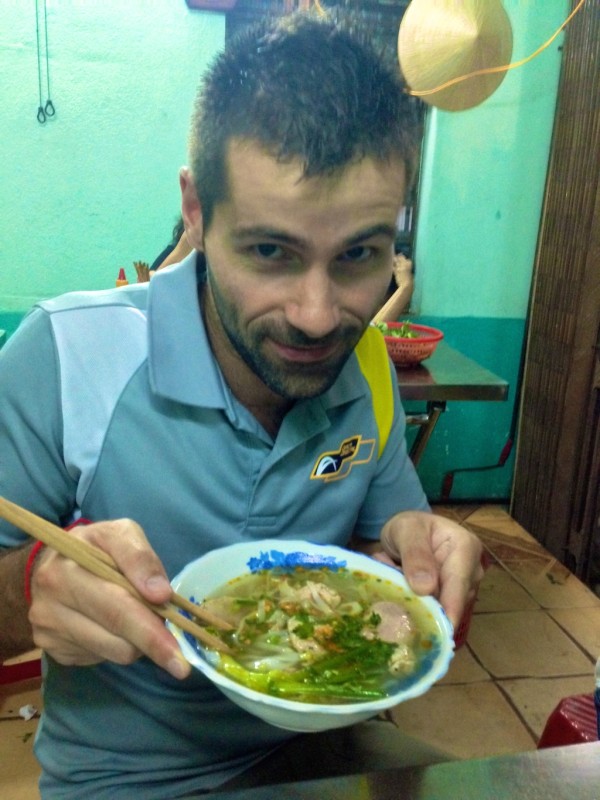
Sebastien's first Pho in Saigon

Sebastien’s first Pho-to…he he he…see what we did there?

Pho originated in the early 20th century in North Vietnam and spread around the world via refugees who fled during the Vietnam War years.

A yummy variant of Pho is “Bun Bo Hue” from the Central Vietnamese city, Hue using rice vermicelli (instead of rice noodles) and served in a delicious shrimp and lemongrass based broth.
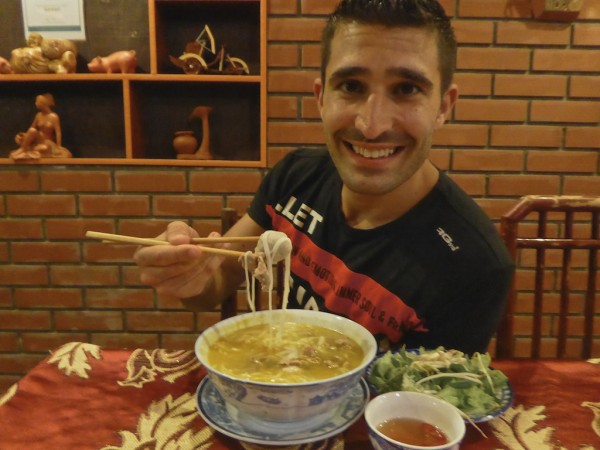
Stefan trying bun bo hue

Stefan trying the Central Vietnamese specialty called bun bo hue

#2 CAO LAU NOODLES OF HOI AN

http://halongbaycruisebooking.com/en/featured/noodles-fried-with-ngan.html
https://www.halong-bay-hotels.com/travel-guide/4-places-to-enjoy-halong-seafood.html
http://vietnamworldheritages.org/vietnam-travel/the-best-coffee-shops-in-da-nang.html

Cao Lau is the signature dish from the Central Vietnamese town of Hoi An and one of Stefan’s favourite traditional foods of Vietnam.
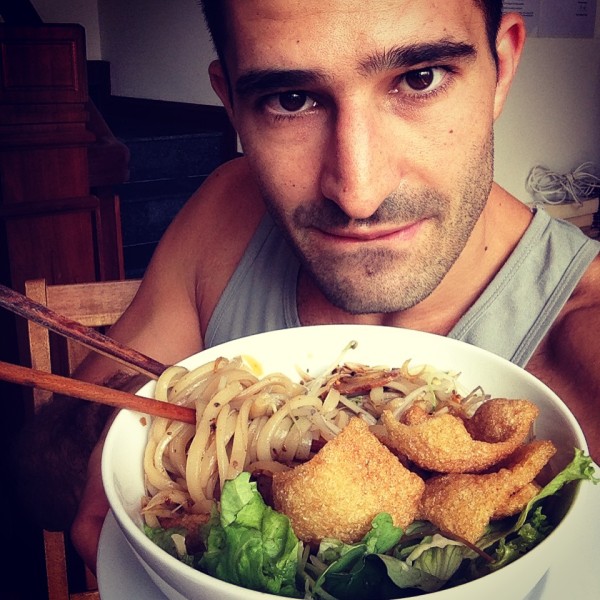
Cao Lau was one of Stefan's favourite traditional foods of Vietnam

Cao Lau was one of Stefan’s favourite traditional foods of Vietnam: here he shows off his freshly made Cao Lau at our cooking class in Hoi An

The recipe for Cao Lau includes a plate of thick dark rice noodles served in small amounts of richly flavoured broth, topped with pork slices, bean sprouts, greens, herbs and deep-fried croutons.

The noodles make this dish unique because they are darkened after being soaked in ash water from a specific tree found only in the nearby Cham Islands.
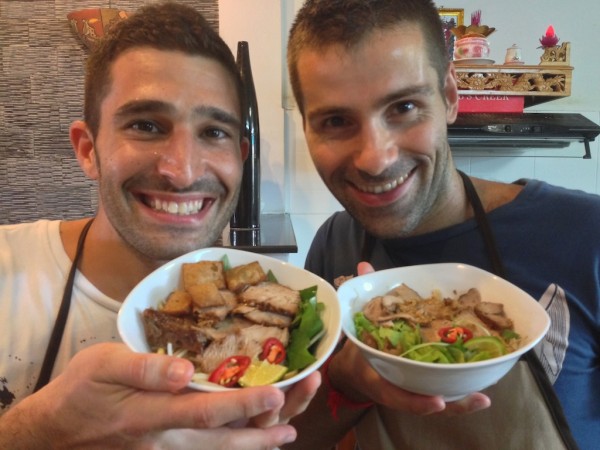
Cau lao noodles freshly made by us

Cau lao noodles freshly made by us at our cooking course in Hoi An

#3 MI QUANG NOODLES

https://cambodiahotels.co/featured/typical-khmer-dishes.html
https://indochinatours.info/cuisine/tre-ba-de.html
http://packagetour.org/foods-drinks/street-food-in-luang-prabang.html

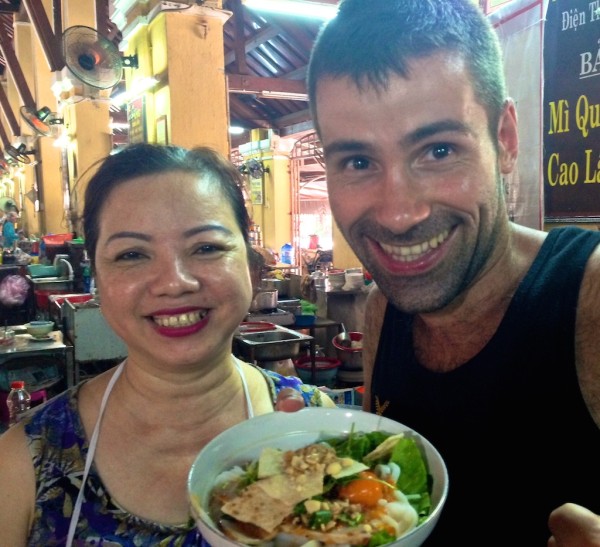
Mi quang is another popular Central Vietnamese noodles dish, similar to Cau Lao, but the noodles are flat white and tinted yellow by the addition of turmeric. The protein source varies from beef, chicken, beef, pork or shrimp.

It is topped with herbs, crushed peanuts and a hard-boiled egg. Mi quang was one of Sebastien’s favourite traditional foods of Vietnam and if you find this sweet lady in the Hoi An local market, her mi quangs are the best ☺.

Mi Quang: one of Sebastien's favourite traditional foods of Vietnam

Sebastien with mi quang noodles: one of his favourite traditional foods of Vietnam

#4 HANOI BUN CHA

Bun cha is a grilled pork based dish served with vermicelli, fresh herbs, vegetables, fish sauce and chopped spring rolls. It originated from Hanoi and spread across Vietnam.

It is served with everything presented in separate bowls (one for the grilled pork, another for the vermicelli, another for the herbs, the chopped garlic and the pickled vegetables) and you assemble it yourself. It is not the healthiest traditional food of Vietnam but a very tasty one!
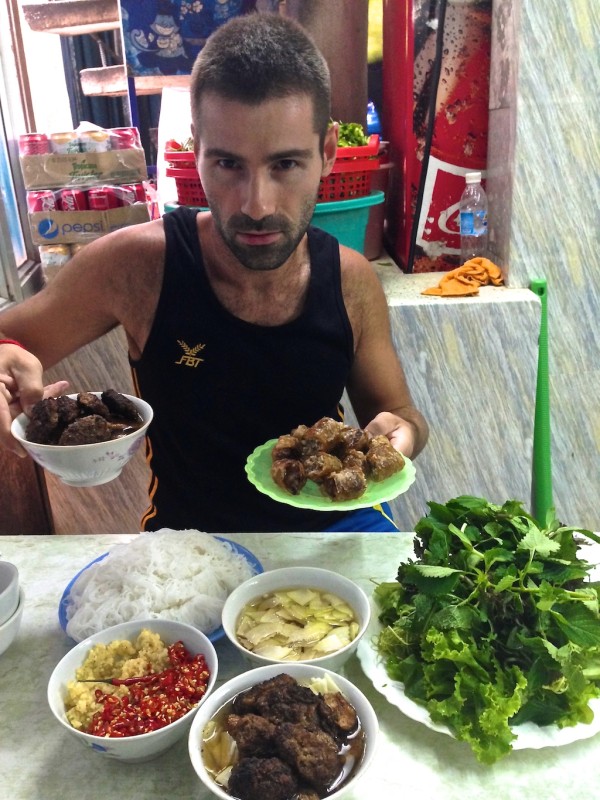
Sebastien preparing his bun cha

Sebastien preparing his bun cha – a North Vietnamese speciality from in Hanoi

#5 SPRING ROLLS

Spring rolls are notorious throughout Vietnam and are either deep-fried with minced pork or served fresh.

The deep fried version is crispy, yummy but not very healthy: we learnt to make deep fried spring rolls during our cooking course in Hoi An and lots of oil was used.
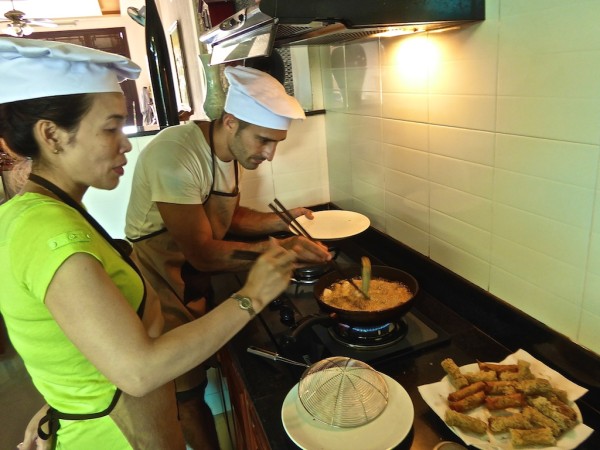
Stefan deep frying steam rolls in Hoi An

Stefan deep frying steam rolls at our cooking class in Hoi An

We preferred fresh spring rolls, also called “garden rolls”. The ingredients are cooked beforehand and then wrapped in rice paper and served with a dipping sauce like fish or peanut sauce. No deep frying involved here!

Sebastien and Quan with fresh spring rolls

Sebastien and Quan enjoying fresh spring rolls in Saigon

#6 BANH XEO VIETNAMESE PANCAKES

Banh xeo are deep fried savoury pancakes. The recipe for banh xeo includes pork, egg, shrimp and bean sprouts.

The name Banh Xeo literally means “sizzling cake” because of the sound the rice batter makes when it hits the pan. This traditional food of Vietnam is great for an afternoon snack.
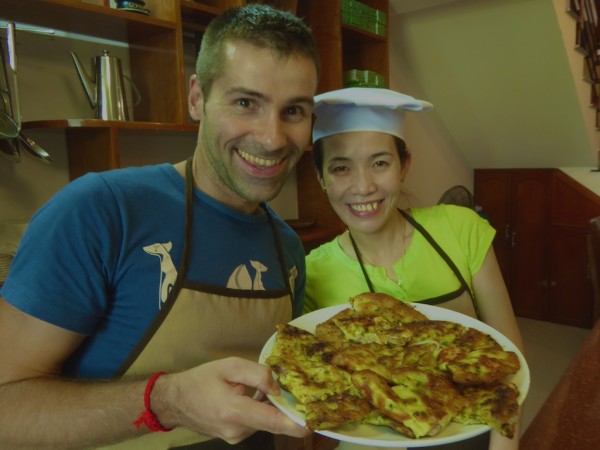
Sebastien with freshly made Vietnamese savoury pancakes: Banh Xeo

Sebastien with freshly made Vietnamese savoury pancakes: Banh Xeo in our cooking class in Hoi An

#7 WHITE ROSE VIETNAMESE DUMPLINGS

White Rose (or ‘banh bao vac’) is another traditional food of Central Vietnam. They are shrimp dumplings, bunched up to look like a rose. They are then steamed and served with a fish sauce for dipping.

https://halongcruisesbooking.com/en/featured/cuisine-foods-in-halong-bay.html
http://ketnoitoduyen.com/featured/resort-dep-o-nha-trang-cho-tuan-trang-mat.html
https://hostels-in-vietnam.com/blog/vietnam-cai-luong.html
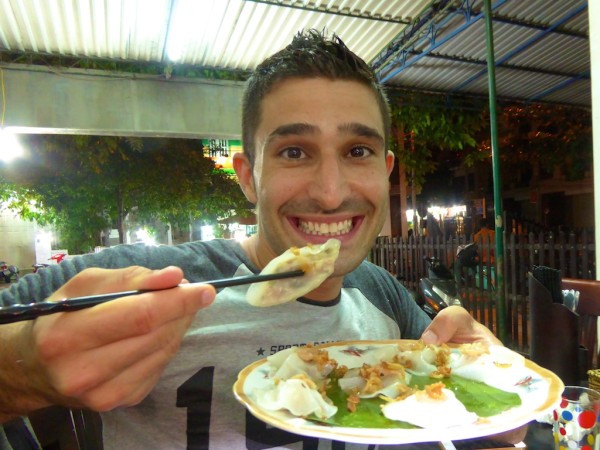
Stefan showing off his white roses

Stefan showing off his freshly made plate of white roses

We learnt to make white roses during our foodie tour in Hoi An on a vespa. The technique is quite complicated and takes many years to master.
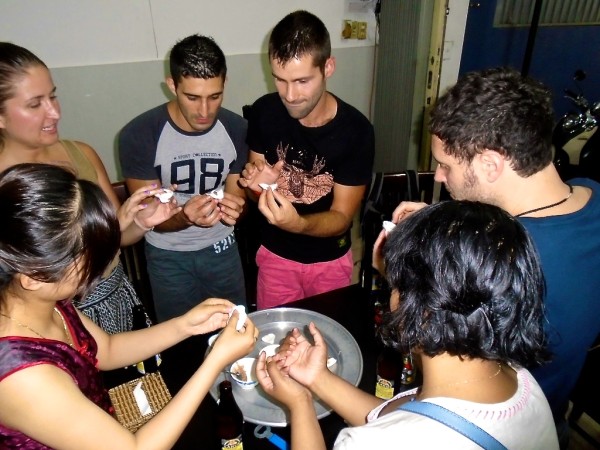
Learning to make white roses

Learning to make white roses – a technique that takes years to master

#8 COM TAM STREET FOOD IN SAIGON

Com tam (‘broken rice’) is a traditional street food snack from Saigon (South Vietnam), made from fractured rice grains and served with grilled pork over the rice, various plates of greens, pickled vegetables, an egg, fish sauce and a small bowl with broth.

We tried a few com tams in Saigon with our friend Quan.
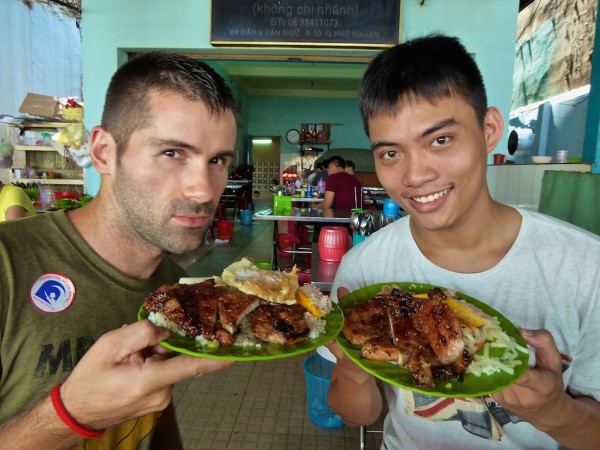
Seb and Quan eating com tam

Sebastien and Quan eating com tam in Saigon

#9 VIETNAMESE COFFEE:

Vietnam is THE place for coffee lovers. It is the second largest producer of coffee (after Brazil) and boy is it good!

Traditionally coffee in Vietnam is served either hot or cold and sweetened with plenty of condensed milk. The iced version makes a very refreshing snack during the humid months, particularly in the South.

Sebastien enjoying an iced coffee

Sebastien enjoying an iced coffee at Au Bang beach in Hoi An

There is a popular variant in Hanoi called egg coffee (ca phe trung), made with the addition of egg yolks and condensed milk. They are frothy, fun to drink and taste like tiramisu.
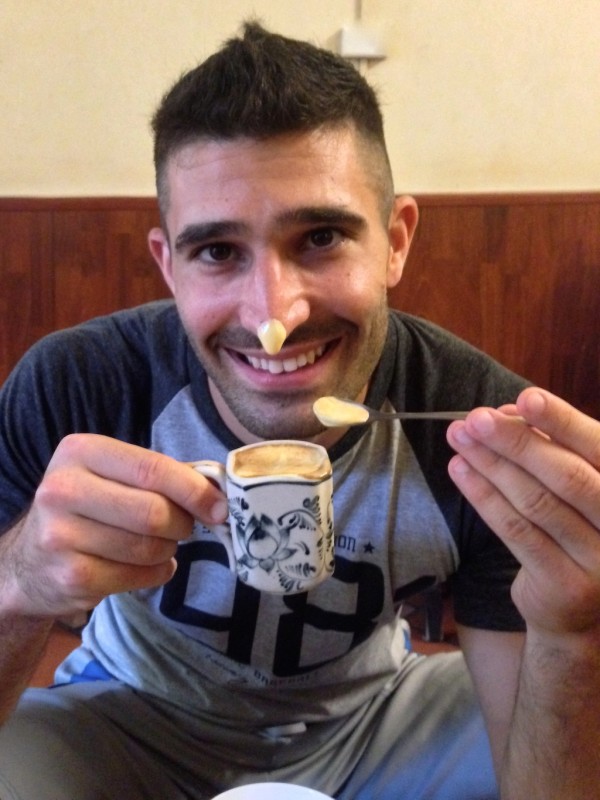
Stefan trying egg coffee

Stefan trying egg coffee – a specialty in Hanoi

#10 OUR NEW FRUIT DISCOVERY: BREAST MILK FRUIT!

Vietnam has the ideal tropical climate to keep fruit lovers happy and we were spoilt with mangoes, dragon fruits, papaya, passion fruits…

But in Hoi An we stumbled upon a new fruit we’ve not yet come across: the breast milk fruit! (Also known as Star Apple or Vu Sua).

Star apples are juicy and sweet. They are so nicknamed because as you peel them, a few white milky drops dribble out!
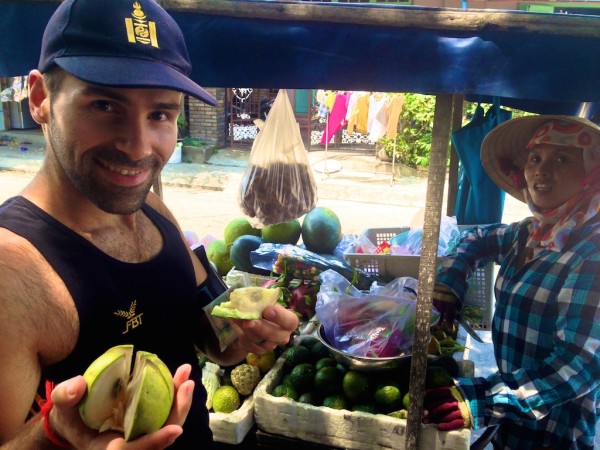
Breast milk fruit: the star apple

Discovering a new fruit: breast milk fruit, also known as a star apple

And to conclude our best traditional foods of Vietnam article, a beer selfie with our favourite brew, aptly named after the city. If you wanted to down it, you’d clink your glasses first and cry out:

“mot hai ba, YO!”

(ie 1,2,3, drink!)
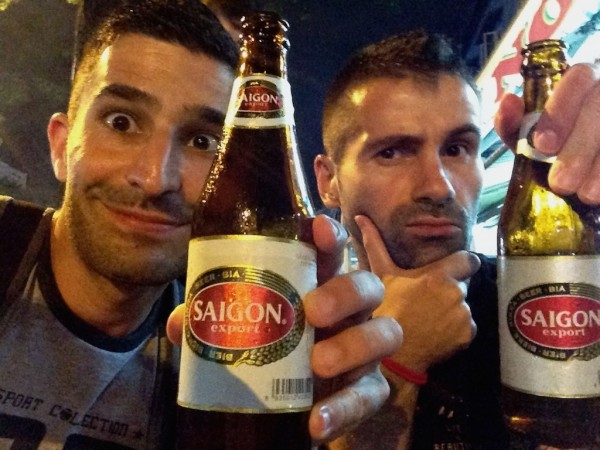
Our Saigon beer selfie

If you were to down it you would cry out: “MOT HAI BA YA!” – meaning 1, 2, 3, drink!